

Field Journal · October 2026 · A 10-minute film
Five lakes, one basin, and a dunk in each. Here's the film, and the notes behind it.
The Great Lakes · 10:18 · Watch on YouTube
The Great Lakes taught me to see in systems: where energy comes in, where it gets held, and where it eventually lets go.
Both my parents grew up on Lake Michigan, so these lakes have been part of my life from the start. They're the one place I've observed at every stage since. Every time I come back, they feel bigger.
In October, Sonya and I took the van around all five and swam in each one: Michigan, Superior, Huron, Ontario, and Erie. Along the way I tried to understand how the whole thing works. Not as five lakes. As one landscape, connected end to end.
A big tub with a small drain
Ice up to two miles thick carved the basin. When it melted back north, it left about 21 percent of the world's fresh surface water sitting in the middle of a continent. Around 40 million people drink from it today.
Systems thinkers talk about stocks and flows. The stock is what's held: the water in the lakes. The flows are what move in and out: rain, snow, rivers, evaporation, and one exit to the sea through Niagara and the St. Lawrence.
Here the stock is enormous and the drain is small. Less than one percent of the water leaves in a year. Every drop waits its turn, and how long it waits depends on where it lands.
How long water stays in each lake
Average retention time in years, listed upstream to downstream.
| Superior | 191 |
|---|---|
| Michigan | 99 |
| Huron | 22 |
| Erie | 2.6 |
| Ontario | 6 |
Superior and Michigan both drain into Huron. Huron drains into Erie, Erie pours over Niagara into Ontario, and Ontario empties into the St. Lawrence.
Lake by lake
Michigan ~99 years
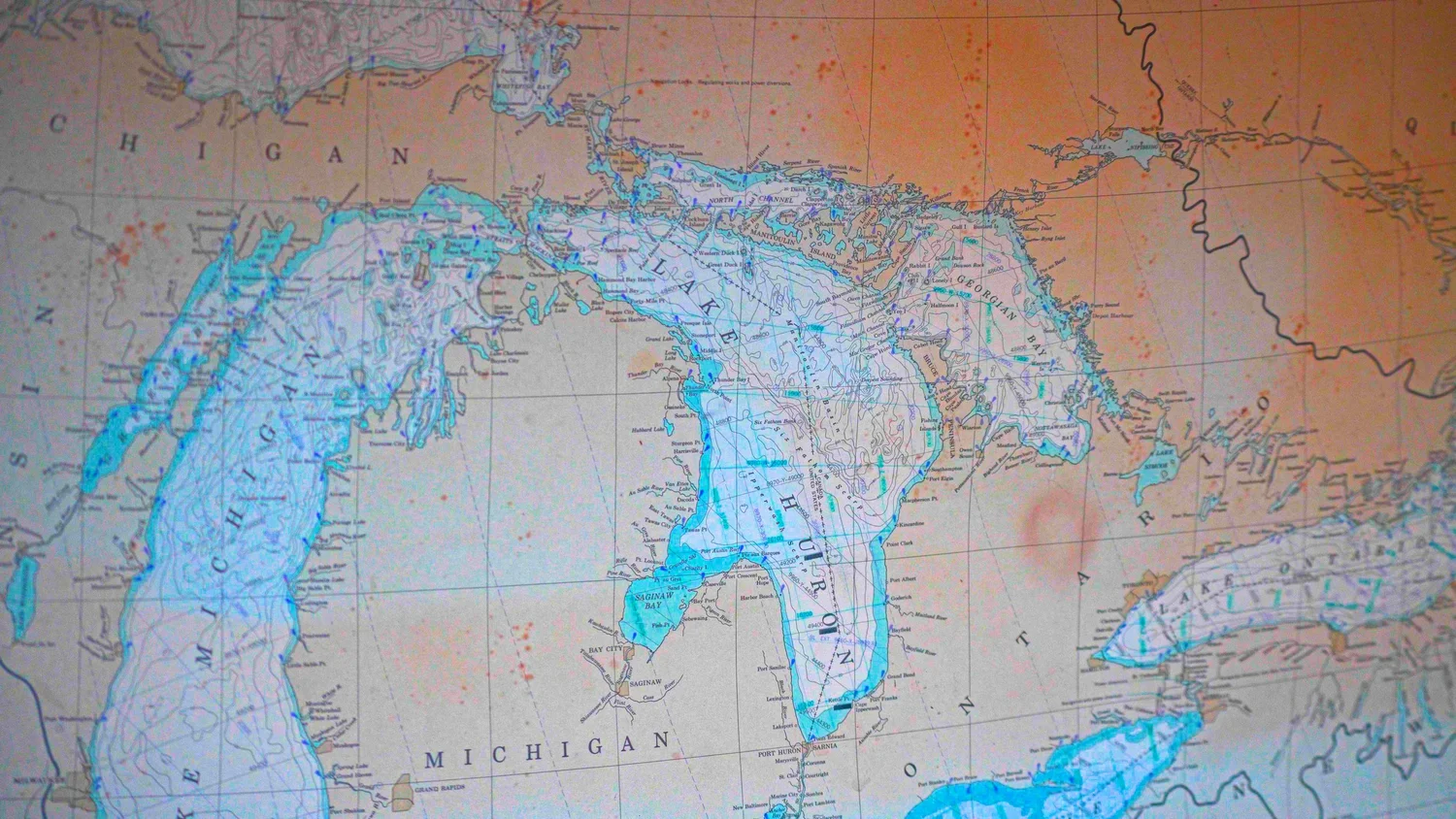
My family's lake, and where the film starts. Michigan and Huron are joined at the Straits of Mackinac and sit at the same level, so on paper they're one lake. But Michigan works like a cul-de-sac. Water comes in from its own rivers and leaves only through that gap to the north. So it holds on for about 99 years.
Superior ~191 years
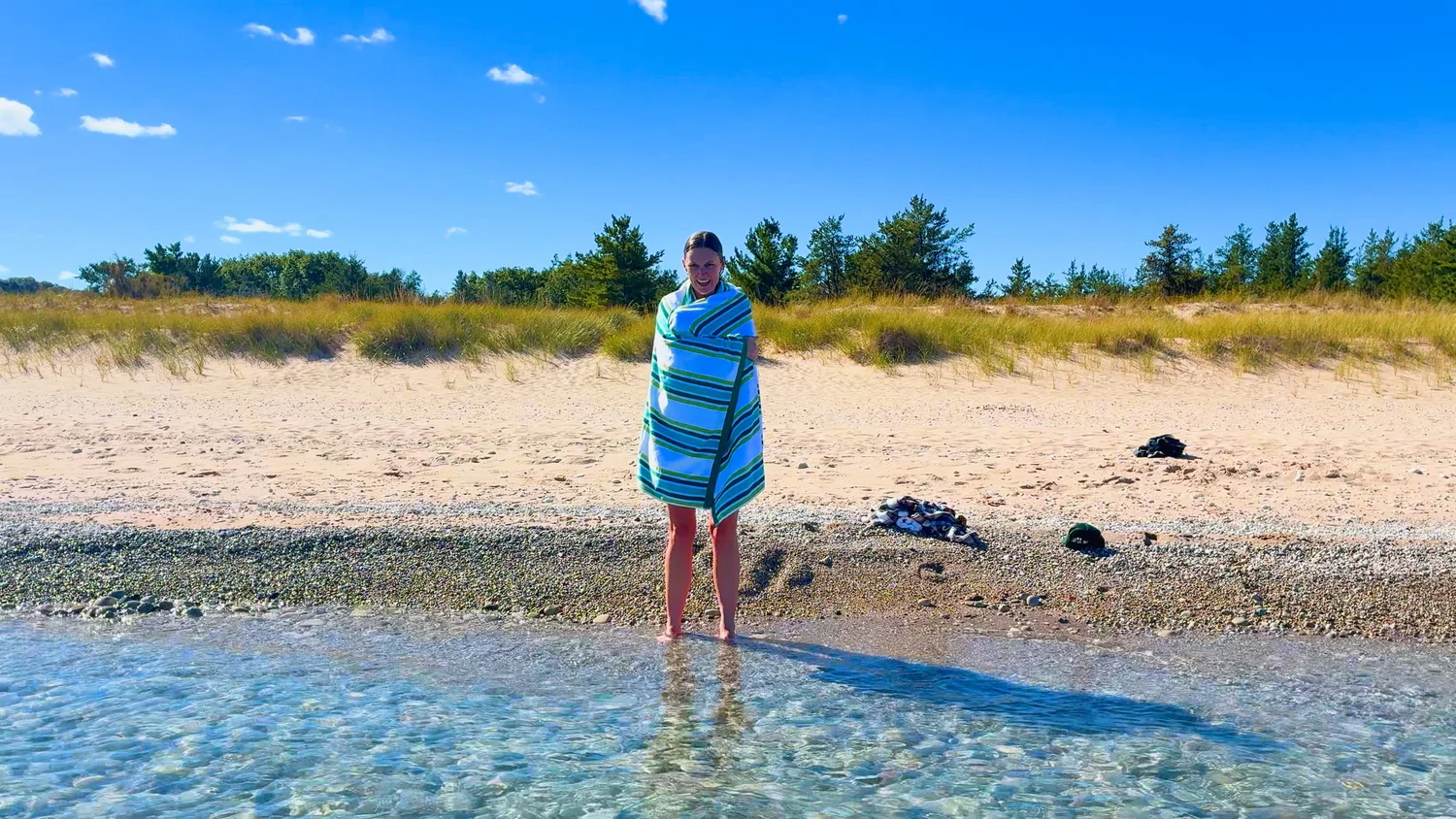
The biggest, the coldest, and the slowest. A drop that lands here today could still be here in two centuries. Superior is also where the iron came from. Ore from Minnesota crossed this lake by the boatload to the mills on the lower lakes. That steel built Detroit's cars, the WWII war effort, and the skyscrapers of Chicago and New York. The Edmund Fitzgerald was hauling ore when it went down in a November storm in 1975, with all 29 crew.
Huron ~22 years
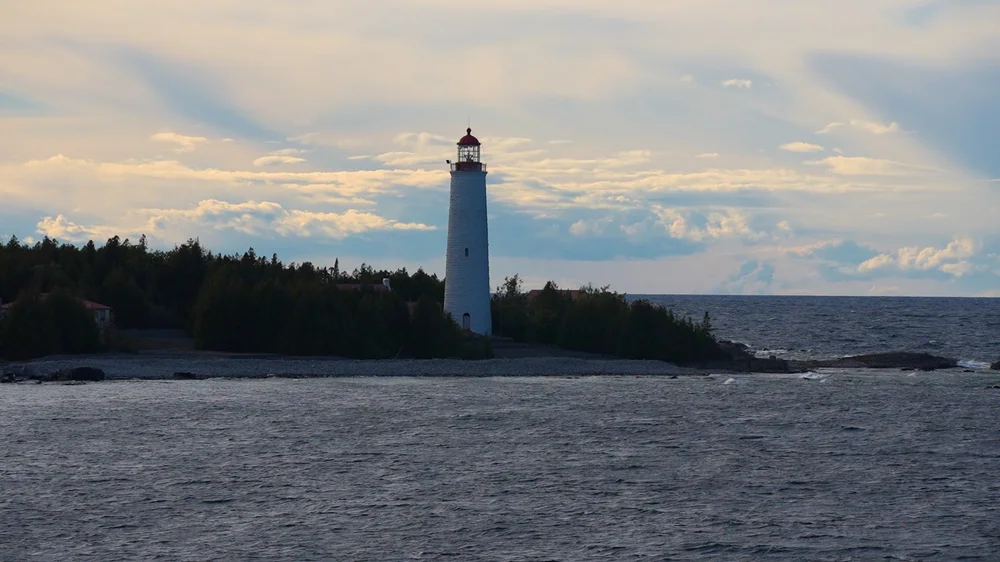
Huron sits on the edge of the Canadian Shield, some of the oldest exposed rock on the planet, scraped bare by the glaciers. Champlain reached Georgian Bay in 1615, and for two centuries after, the fur trade moved through these waters by canoe. We crossed on the Chi-Cheemaun, the ferry from Tobermory to Manitoulin, the largest freshwater island in the world.
Ontario ~6 years
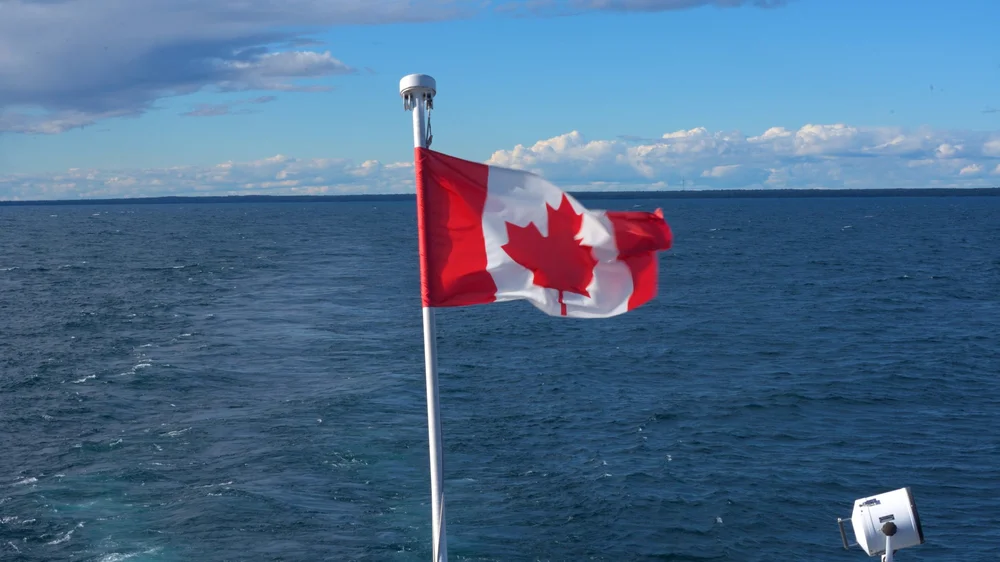
The last lake in the chain, and the Canadian side of the story. Everything that happens upstream passes through here on its way to the sea. Everyone on this system is downstream of someone.
Niagara the drain
This is the system in motion. More than five billion gallons go over every hour, and it looks like the whole basin is emptying. It isn't. Even at that rate, less than one percent of the water leaves in a year. Standing at the edge, the size of the stock is hard to ignore.
Erie ~2.6 years
The shallowest and warmest of the five, and the fastest to turn over. By the 1960s people were calling it a dead lake. In 1969 the Cuyahoga River caught fire in Cleveland. The fire became a national symbol and helped push through the Clean Water Act and a cleanup agreement between the U.S. and Canada. Erie came back within a couple of decades.
A small stock recovers fast. It also gets sick fast. In 2014 an algae bloom left more than 400,000 people around Toledo without safe tap water.
What a slow drain remembers
The longer water stays, the more a lake behaves like a reserve. Superior can ride out a dry decade without much change. That's resilience. The same slowness cuts the other way. Whatever goes into Superior today, good or bad, will still be there when our grandkids swim in it.
Erie is the opposite. It forgets fast. That's why it could recover, and why it can slip again just as quickly.
Every system has stocks that build slowly and flows that change quickly. A system this big is easy to miss from one shore. After a lifetime of coming back, I'm starting to see the whole shape of it.

Watch the film
Ten minutes. Five lakes, one basin, and a dunk in each.
Watch on YouTube → Get the monthly email →Thanks to Sonya, Stephen, and Stephen Christensen for helping produce this film. Archival footage courtesy of the U.S. National Archives and Records Administration.